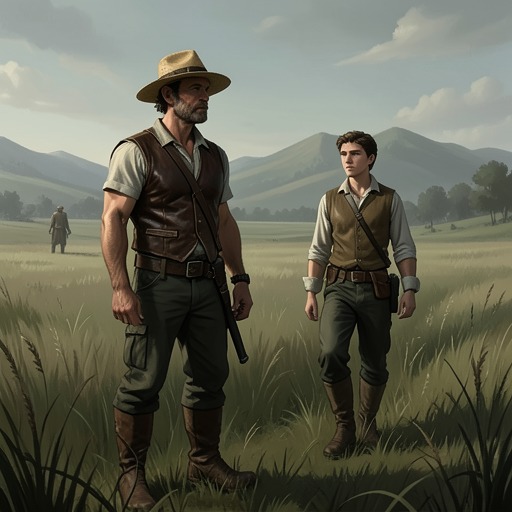
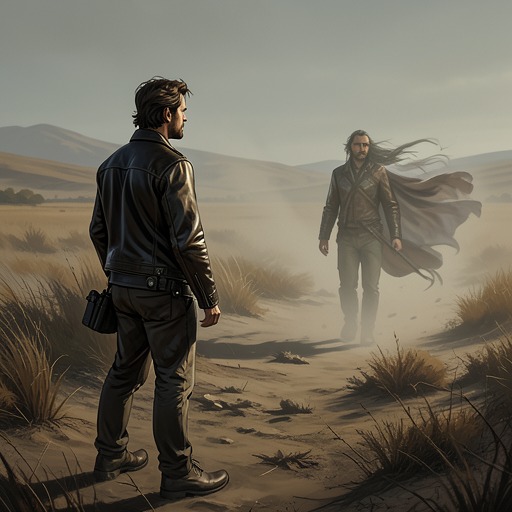
Phil Burbank—Bronco Henry: mentor and protégé
The Power of the Dog (Thomas Savage Edition)Phil Burbank’s bond with Bronco Henry is presented as both a practical apprenticeship and the enduring center of Phil’s private ideal of cowboy life. Bronco Henry taught him to braid rawhide and stood in memory as an exceptional rider and cowboy. Years later, Phil’s stories and working habits kept that inheritance present, even as his attachment to the past became something he guarded rather than fully explained.
Identity and Apprenticeship
Bronco Henry appears in Phil’s recollections as the best of riders and cowboys, a figure whose standing rests on skill rather than formal instruction. He taught Phil the art of braiding rawhide, giving their relationship a tangible legacy: a craft Phil could carry into his own life and work. The novel offers no extended account of their time together, but this specific act of teaching establishes a direct line between Bronco Henry’s expertise and Phil’s practiced abilities.
Phil’s admiration also shapes the way he recounts Bronco Henry to the younger ranch hands. His stories make the absent mentor a continuing presence among men who did not know him, passing on an ideal through recollection as well as through work. The stories are not simply a record of the past; they help define what Phil recognizes as excellence in a cowboy.
Skill and the Work of the Ranch
The craft Bronco Henry taught Phil belongs to a larger world of demanding ranch labor. Phil oversees haying, inspects and repairs equipment, directs irrigation, and determines when the work should begin. His responsibilities include keeping eight mowing machines in order, along with rakes, derricks, tents, and the mobile cook and dining shacks used by the crews. Against this extensive routine, rawhide braiding is one element of a broader competence grounded in practical knowledge and sustained work.
The contrast between Phil and the other hands also suggests how he makes physical toughness part of his identity. Ranch workers commonly wear gloves to protect their hands from rope burns, splinters, cuts, and blisters; Phil refuses them and scorns those who rely on them. The account does not say Bronco Henry taught him this refusal, so it cannot be treated as a direct lesson between them. But alongside the rawhide craft, it shows the kind of unprotected, hands-on mastery through which Phil presents himself as a cowboy in Bronco Henry’s tradition.
Stories and Recollection
Phil keeps Bronco Henry alive in conversation, returning to anecdotes when the ranch hands gather. One story concerns Bronco Henry riding while sick with fever at the age of forty-eight. Phil regards the ride as exceptionally beautiful and sometimes longs to tell the whole story, though the narration does not disclose everything he would include. His remembered mentor is thus both publicly celebrated and privately withheld: Phil offers the men a tale, but not necessarily the full account behind it.
Other memories attach Bronco Henry to Phil’s own childhood and to a vanished West. Looking back on the days of his youth, Phil recalls an earlier Fourth of July and wonders whether that was when he first saw Bronco Henry. The recollection places their meeting within an older world of brass bands, fireworks, and days Phil regards as gone. Its uncertainty matters: the memory surfaces as a question rather than a settled chronology, showing how Bronco Henry has become bound up with Phil’s broader nostalgia for the past.
Attachment and Silence
Phil’s remembrance of Bronco Henry is intense but selective. After telling a story, he watches the lit bedroom window of the Big House go dark and realizes that George has not waited up. On another occasion, frustration with George turns Phil back toward the younger men and another Bronco Henry anecdote. These moments set the mentor’s remembered company against Phil’s present isolation without establishing that Bronco Henry himself caused it.
Phil’s fear of alcohol gives his storytelling a further edge. He hates and fears drinking because he is afraid of what he might reveal; at the same time, he longs to tell the whole story of Bronco Henry’s fever ride. The narrative connects his guardedness to the possibility of disclosure but does not specify what he fears saying or make the mentor story itself a confession. Bronco Henry’s significance therefore lies not only in the skills and standards Phil inherited, but also in the memories Phil repeatedly approaches and leaves incomplete.